

Linse · autonomous AI
Proactive AI
Proactive AI is artificial intelligence that takes the first step. Instead of waiting for a question, it keeps your context in mind, notices what needs doing, such as a follow-up, a confirmation or a deadline, and prepares the work before you ask. Good proactive AI still lets you decide what happens.
Proactive AI vs. reactive AI
Most AI tools are reactive: they answer when you write to them. Proactive AI changes who starts.
| Reactive AI | Proactive AI | |
|---|---|---|
| Who starts | You, with a question or a request | The AI, when it notices something that needs doing |
| When it acts | Only while you are in the conversation | Also while you are away, at the right moment |
| What it needs from you | Every instruction, every time | Your context once, and your approval before it acts |
| Example | "Help me write to the people in tomorrow's meeting." | Tomorrow's meeting is still unconfirmed, so it drafts the message and asks you before sending it. |
How Linse acts before you ask
Linse is an autonomous AI, and being proactive is how it works: five steps, from what it remembers to what it reports back. The fourth one is the difference.
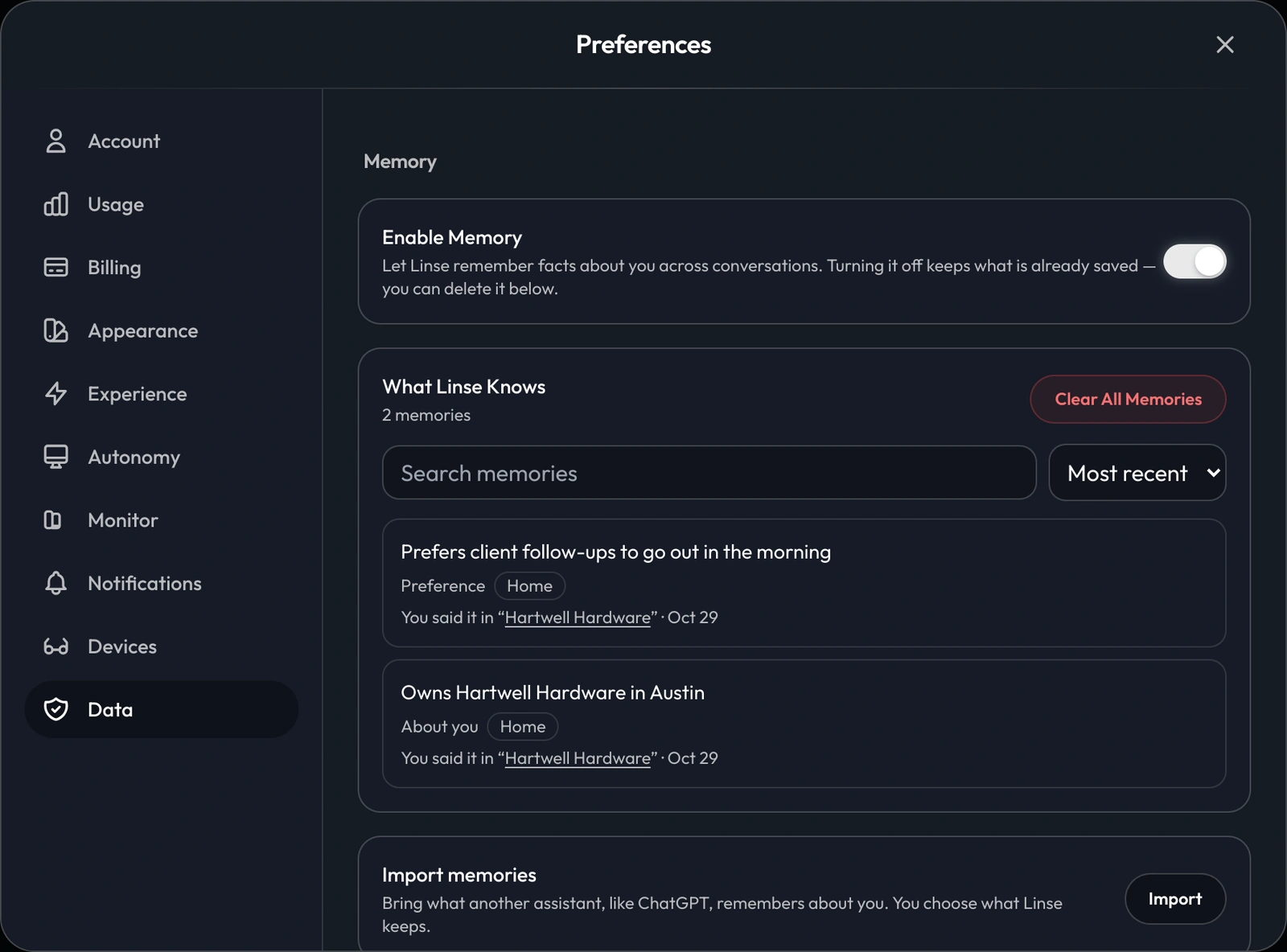
It remembers your context
Your clients, your commitments and how you like things done stay with Linse, so it does not start from zero each time.
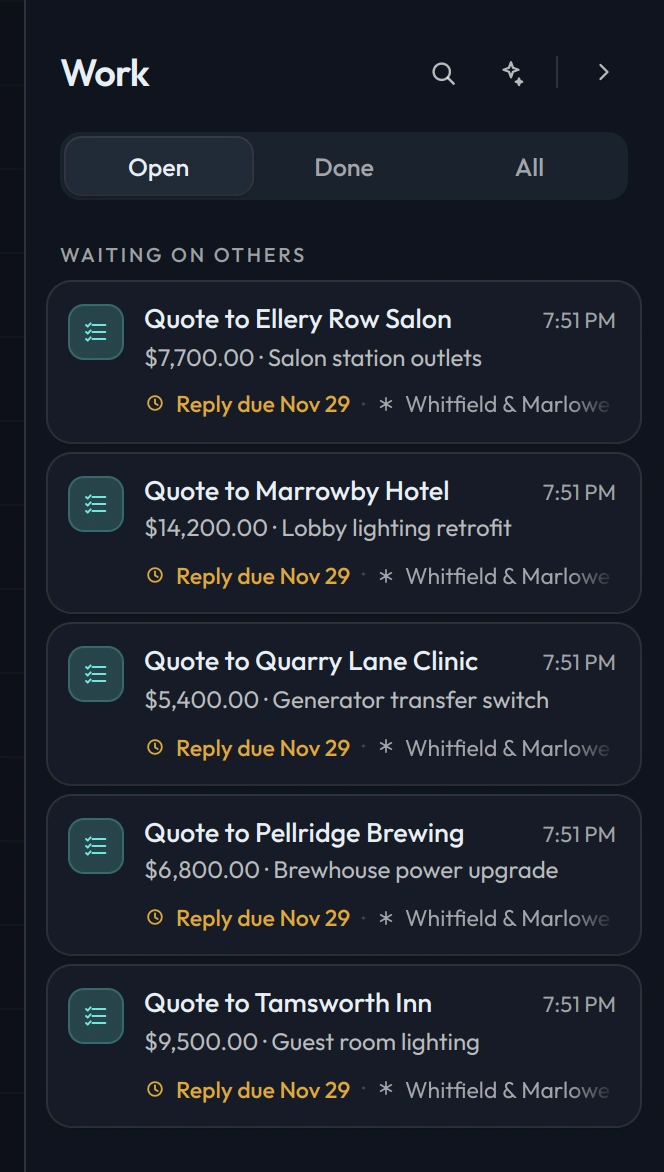
It notices what needs doing
A follow-up that is due, a confirmation still missing, a deadline getting close. Linse spots them without you asking.
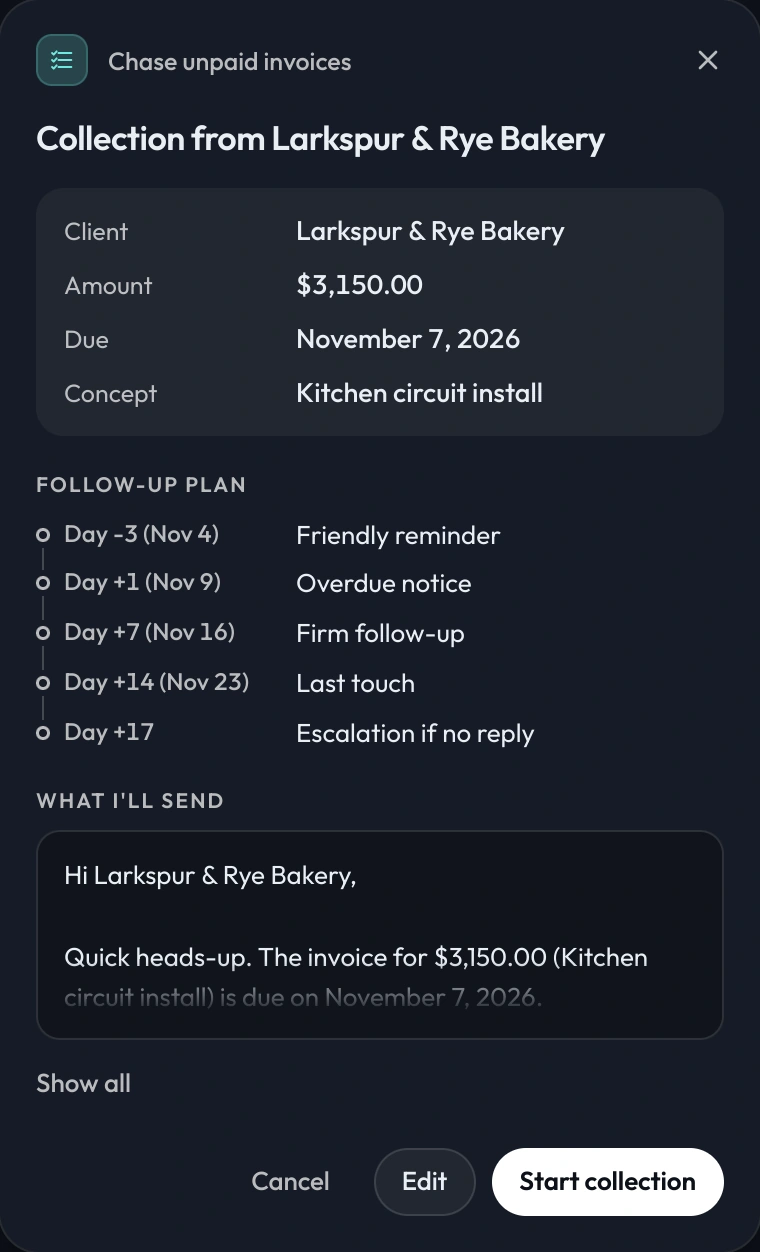
It prepares the work
It drafts the message, lines up the next step and picks the day, so the work is ready when you look.
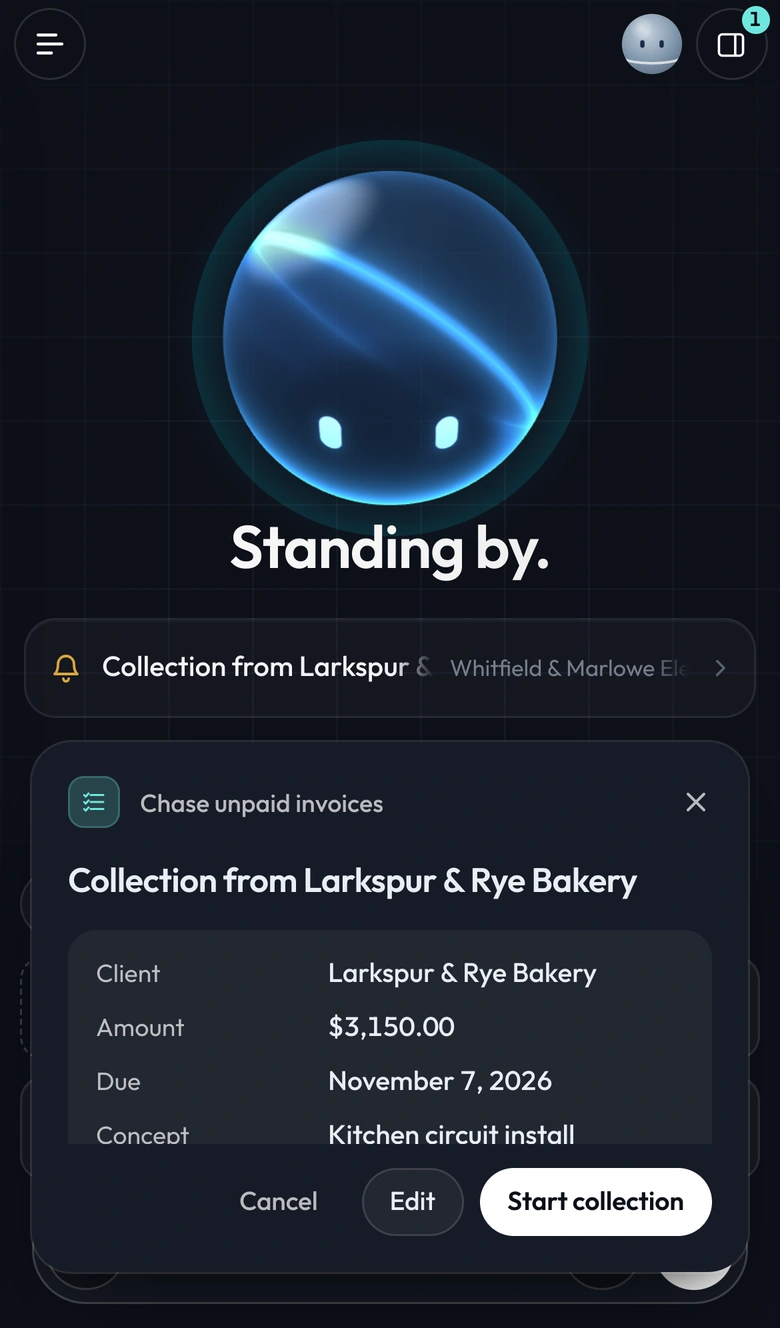
It asks for your approval before acting
Nothing goes out until you approve it. You see exactly what Linse will send and to whom, and you can change it or say no.
It reports back
When the work is done, Linse shows you what happened and what is still waiting on someone else.
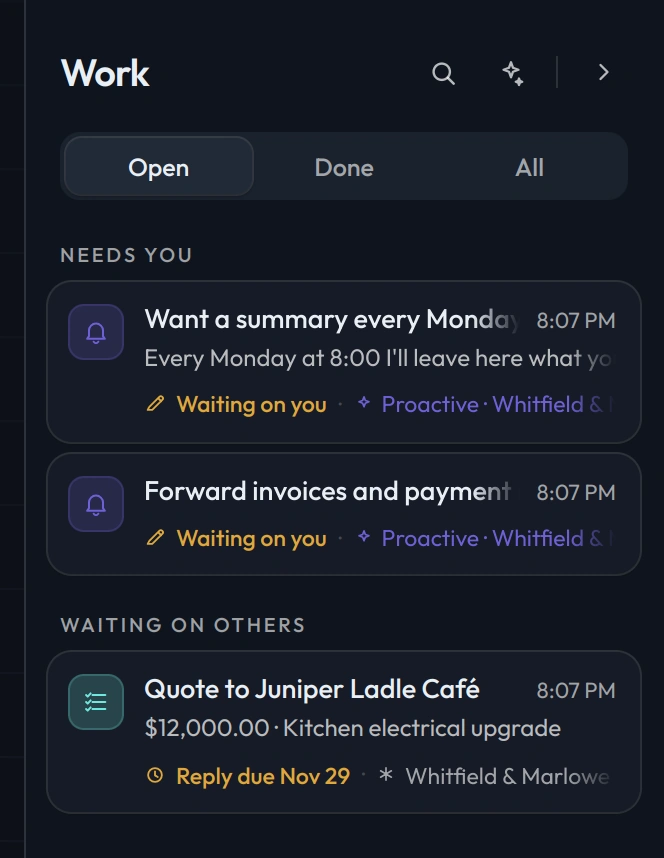


Three examples
The same five steps, in three kinds of work.
An unpaid invoice
An invoice passes its due date. Linse notices, prepares a polite reminder with the amount and the date, and sends it once you approve.
Tomorrow's appointments
Each appointment on tomorrow's schedule gets a confirmation message, and patients who haven't confirmed get a reminder. You see who confirmed when you return.
An open deal
A prospect went quiet after your proposal. Linse notices, prepares the follow-up for the day it is due and shows you which deals replied.
When proactive AI should not act alone
Acting first is only useful if you stay in charge. Linse is built around that.
- Approval: Linse prepares, you decide. It sends nothing until you approve, and for a workflow that repeats you approve the plan before it starts.
- Permissions: Linse uses only the tools you connect, and you can pause its automations in Settings at any time.
- Your information: you can see and delete what Linse remembers. Linse does not sell your data, and your content is not used to train public models.
Proactive AI in 2026
Between August and October 2026, the large AI companies launched proactive assistants of their own: xAI's Grok Bot (August), Meta's Muse (September), OpenAI's dots (September) and Anthropic's Claude Duet (October, as a research preview). Proactive AI went from an idea to a product category in a few weeks. Linse's focus is approved work for professionals, in English and Spanish, with a free plan. (Updated October 29, 2026.)
Questions about proactive AI
Short answers to what people ask most.
Is proactive AI safe?
It depends on what it may do on its own. Linse prepares work and asks for your approval before it sends anything, it uses only the tools you connect, and you can pause its automations at any time.
Does Linse act without asking?
No. Linse notices and prepares work on its own, but nothing goes out until you approve it. For a workflow that repeats, you approve the plan once before it starts, and you can pause it in Settings.
Is proactive AI the same as an AI agent?
Not quite. An AI agent is software that carries out tasks, and it can be reactive or proactive. Proactive describes when the AI acts: before you ask. Linse is an autonomous AI that works proactively and waits for your approval before acting.
How is it different from ChatGPT?
ChatGPT is a general-purpose assistant you mostly use by starting a conversation. Linse is built to start the work: it keeps your context, notices what is due, prepares it and asks for your approval, through your connected tools and professional Spaces.
Is it free?
Yes. Free is $0/month and permanent. No card needed. The plans with more usage are on the pricing page.
Try proactive AI that asks first
Create a free account and tell Linse what you're working on. It takes it from there, with your approval.